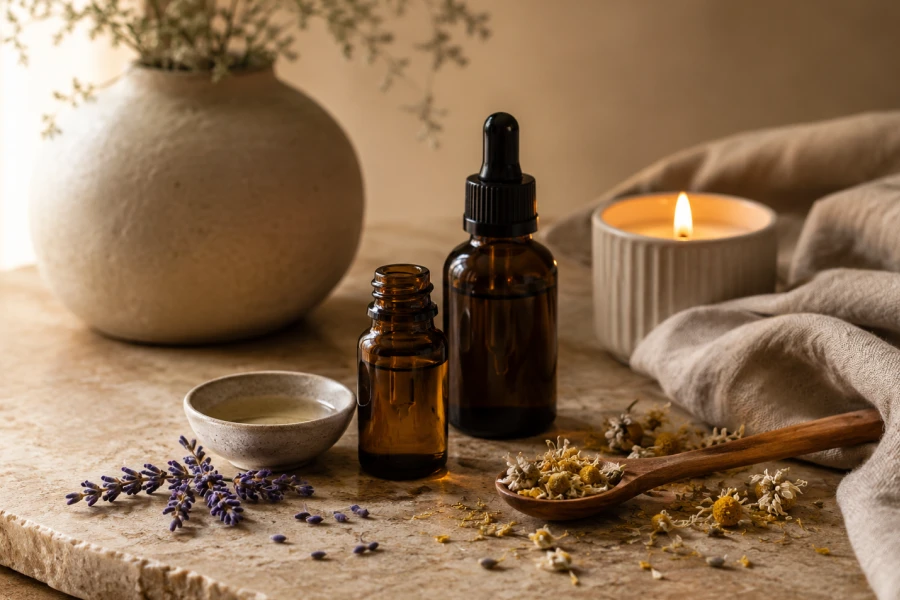
Essential oils for stress and anxiety can make relaxation feel more sensory and immediate. Scent reaches memory quickly. It can remind the body to slow down. It can also create a familiar cue for rest. This does not replace medical care or professional support. It can, however, support a calming routine. A calming essential oil ritual gives self-care a clear starting point. You breathe. You notice. You soften. The practice becomes easier when the senses feel involved.
Grounding happens when attention returns to the present. Scent can help with that return. A familiar aroma gives the mind something simple to notice. Lavender may feel soft. Citrus may feel bright. Cedarwood may feel steady. Personal preference matters more than trends. The best scent is the one your body welcomes. A scent-based stress support routine works when it feels safe and pleasant. That feeling encourages repetition.
Aromatherapy works best when connected to ordinary moments. You can use it before journaling. You can use it during evening stretching. You can use it after a demanding work call. The scent becomes a signal. Your body learns that this signal means slowing down. A diffuser can create atmosphere. A diluted roll-on can make the ritual portable. Safety always matters, especially with skin contact. Thoughtful use keeps the experience comfortable. Consistency makes the cue stronger.
Choosing oils should feel personal, not overwhelming. Start with one or two scents. Notice how each one affects your mood. Avoid strong aromas that feel sharp or distracting. Use proper dilution for topical applications. Keep oils away from eyes and sensitive skin. Consider pets, children, and household sensitivities. Quality also matters because purity affects the experience. A natural relaxation method should feel gentle, informed, and respectful. Calm grows better without guesswork.
Nighttime is a natural place for scent rituals. The body responds well to repeated evening cues. A soft aroma can mark the transition away from daily demands. You might pair it with dim lighting. You might pair it with quiet breathing. You might pair it with a warm shower. These cues tell the mind that stimulation is ending. A bedtime aromatherapy habit can make rest feel more inviting. Sleep preparation becomes a ritual, not a scramble.
Aromatherapy supports relaxation, but it is not magic. One scent will not erase every worry. A single routine will not fix chronic stress overnight. Real value comes from repetition. The ritual creates a predictable moment of care. That predictability matters during anxious seasons. You begin to associate the scent with steadier breathing. You also learn which aromas genuinely help. Realistic expectations make the practice more satisfying. Gentle support often works best when it stays simple.
A cue becomes powerful when the body recognizes it. The aroma appears. Your shoulders soften. Your breathing slows. Your attention returns to the room. This response develops through practice. It also develops through consistency. A mindful scent practice can help you create that association. Essential oils for stress and anxiety work best as part of a wider care rhythm. The scent opens the door. Your habits carry you through it.

Leave a comment