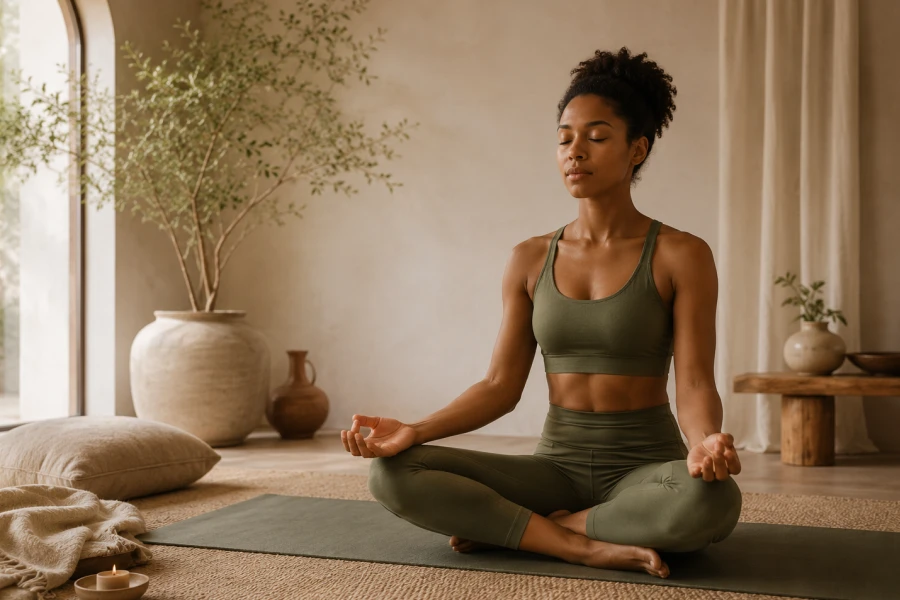
Meditation and yoga for balance works because it connects attention with physical experience. The mind can feel scattered after a demanding day. The body can carry that pressure in hidden places. Gentle yoga brings those signals into awareness. Meditation gives them room to settle. Together, they create a practice that feels complete. You are not chasing a perfect mood. You are learning how balance feels in real time. A relaxation through yoga routine makes that learning easier. Calm becomes something you can repeat.
Yoga prepares the body for stillness. Meditation gives the mind a gentle place to land. This pairing helps people who struggle with sitting quietly. Movement releases restlessness before silence begins. Breath links both practices into one rhythm. The transition feels natural instead of forced. Your attention becomes easier to guide. Physical sensations offer clear reference points. A meditation habit builder can support that structure. Balance grows when the practice feels approachable.
Emotions often move through the body before the mind understands them. Tight shoulders may reveal pressure. A clenched stomach may signal worry. Restless legs may show nervous energy. Yoga helps you notice these messages. Meditation helps you sit with them kindly. That combination reduces the urge to push feelings away. You become less afraid of discomfort. You also become less controlled by it. Emotional balance starts with honest attention.
A balanced practice should not exhaust you. It should help you feel more available to yourself. Slow spinal movement can ease physical stiffness. Hip stretches can release stored tension. A supported child’s pose can create emotional safety. Seated breathing can close the routine gently. These movements do not need advanced flexibility. They need patience and repetition. Simple sequences often work best. Sustainability keeps the practice from becoming another unfinished goal.
Stressful seasons can make wellness feel distant. That is when simple practices matter most. A short session can steady your focus. A longer exhale can quiet urgency. A familiar stretch can remind your body that safety still exists. You may not solve every problem immediately. Still, you can meet the moment with more steadiness. A calm daily practice gives your nervous system repeated reassurance. This reassurance compounds over time.
Balance looks different for everyone. Some people need more movement. Others need more stillness. Some prefer morning rituals. Others settle better at night. Your practice should reflect your temperament. It should also reflect your schedule. Personalizing the rhythm makes commitment easier. You can adjust without abandoning the whole routine. This flexibility keeps the experience supportive. A personal practice becomes more trustworthy than a rigid plan.
Balance is not a single achievement. It is a skill built through repetition. Each practice session gives you another chance to return. You return after distraction. You return after tension. You return after a hard day. This return becomes the real training. A emotional reset practice helps you build that skill with kindness. Meditation and yoga for balance becomes less mysterious with time. It becomes a reliable way to feel grounded again.



Leave a comment