
Daily mindful living begins with tiny choices that feel almost too simple. You notice your breath before checking your phone. You slow down before answering a message. You stretch before carrying tension into the next task. These moments seem small, yet they build emotional strength. The point is not to become perfectly peaceful. The point is to become more present. A mindful living method helps ordinary routines feel more intentional. Calm starts to appear in practical places. Your day becomes easier to inhabit.
Mindfulness becomes useful when it survives real life. Homes are rarely silent. Schedules rarely feel spacious. People interrupt. Plans shift. Energy changes without warning. A realistic practice accepts that movement. You can breathe while the kettle warms. You can stretch beside the bed. You can pause before opening your laptop. This flexible approach makes a balanced wellness routine feel reachable instead of idealized.
Waiting until stress feels intense makes self-care harder. Early awareness gives you a better opening. You might notice a tight jaw. You might notice shallow breathing. You might notice impatient thoughts arriving quickly. These signals are useful, not annoying. They tell you when to pause. A short reset can prevent emotional overflow. You do not need to analyze everything. You only need to respond sooner. That is where calm becomes practical.
Everyday tasks can become quiet anchors. Washing your face can invite slower breathing. Making tea can create a small sensory reset. Folding laundry can become a rhythm instead of a burden. Walking between rooms can help you release your shoulders. These actions already exist in your day. Mindfulness simply changes how you enter them. The practice does not demand extra time. It changes the quality of time already present. That shift makes consistency easier.
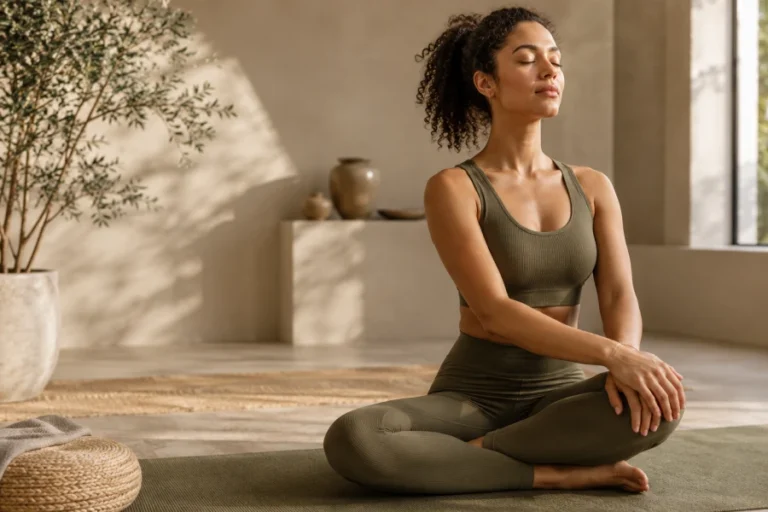
Movement helps mindfulness feel embodied. Thoughts can be difficult to quiet directly. The body often gives the mind an easier path. Gentle yoga creates a clear point of attention. You can follow the breath through each stretch. You can notice where resistance appears. You can soften without forcing anything. A gentle yoga ritual supports emotional balance through repetition. The result feels calm, grounded, and human.
Mindful living does not remove difficult feelings. It changes your relationship with them. Irritation can appear without controlling your next sentence. Worry can rise without steering your whole afternoon. Sadness can be present without becoming the only truth. That small space matters. It gives you room to choose. It helps conversations feel less reactive. It makes decisions more thoughtful. Over time, this space becomes one of your strongest tools.
Long-term calm grows through repeated returns. You return to the breath. You return to the body. You return to the present task. This rhythm slowly reshapes your day. A mind-body wellness approach can make self-care feel less dramatic and more dependable. You stop waiting for perfect conditions. Instead, you build steadiness inside imperfect ones. Daily mindful living becomes a quiet form of confidence. It teaches you that calm is practice, not luck.



Leave a comment