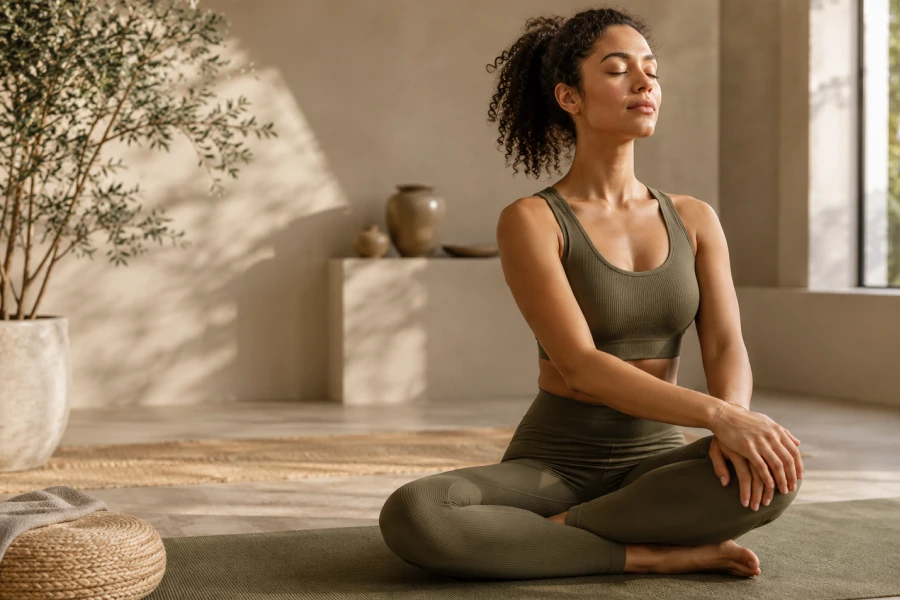
Yoga mindfulness for stress relief feels powerful because it starts exactly where you are. You do not need a perfect mood. You do not need a quiet house. You simply need a few intentional minutes. Stress often builds when the body stays braced for too long. Gentle movement gives that tension somewhere safe to go. Breath awareness helps the mind stop racing ahead. A mindful movement routine can turn ordinary pauses into meaningful resets. Small rituals begin to feel reliable. Over time, calm becomes easier to access.
Many people imagine mindfulness as something separate from normal life. That idea makes the practice feel harder than it is. Practical mindfulness works inside your real schedule. It can happen before work. It can happen after a difficult conversation. It can happen during a slow stretch on the floor. The body gives immediate feedback when tension begins to release. Shoulders drop. Breathing deepens. Thoughts still appear, yet they feel less demanding. This is why a stress relief meditation practice supports real emotional steadiness.
Mornings often set the emotional tone for the whole day. A rushed start can make every task feel sharper. Even five minutes of gentle movement can change that rhythm. You might begin with seated breathing. Then you can add slow neck rolls. A forward fold can help the body release sleep stiffness. This routine does not need to look impressive. It only needs to feel honest. Consistency matters more than intensity. With time, your morning becomes a daily calm ritual instead of another pressure point.
Breath awareness works best when it feels gentle. You are not forcing yourself into calm. Instead, you are noticing how the body already responds. One hand on the chest can create useful feedback. One hand on the belly can invite slower breathing. A longer exhale often tells the nervous system to soften. This simple shift can feel surprisingly grounding. Some days will still feel messy. That does not mean the practice failed. It means the practice is meeting real life with patience.
Immediate calm is helpful, but long-term change matters more. Repeated practice teaches you to notice stress earlier. You may recognize tension before it becomes overwhelming. That awareness gives you more choice. You can pause before reacting. You can breathe before answering. You can stretch before spiraling into worry. These small interruptions create emotional space. The practice becomes less about escaping stress. It becomes more about responding with steadier attention.
A grounded routine should feel easy to repeat. Choose a mat, chair, or quiet corner. Keep the setup simple. Add one calming cue, such as soft light. Begin with the same opening breath each time. Repeat one familiar stretch until it feels natural. Finish with a short moment of stillness. This structure helps your mind recognize the ritual. Familiarity lowers resistance. A yoga-based relaxation plan becomes easier when every step feels clear.
A habit forms when the practice feels supportive, not demanding. You return because it helps. You keep going because it fits. Missed days stop feeling like failure. They become simple pauses in the rhythm. Your body starts asking for slower breathing. Your mind begins to trust the reset. Stress still arrives, but it does not own the day. The value is not perfection. The value is learning how to come back to yourself.




Leave a comment